How did you first get into poetry?
I think for me, it probably started in high school, like it does for a lot of poets, with writing really bad epic poems that felt really good to write at the time. So, you know, I definitely got that sort of good feeling from doing it, and I realized it was something I really enjoyed. And I’ve always been kind of verbal. But yeah, I definitely started in high school. I had a really amazing English teacher my senior year who taught American Lit, and she was really encouraging me. And I had a creative writing teacher that time too. So that was when I started kind of doing it as something, it sort of became a hobby, but it also became like a source of fulfillment and something that I wanted to learn more about and that I wanted to connect with other people about. So that was kind of how it started.
What is your favorite thing about poetry?
We have this kind of idea in our culture that, like, when you write a poem, or when you’re a writer, generally, you’re kind of doing it by yourself. And I think for me, it’s the opposite. It’s a place like the page is a meeting place, and I can kind of take something that gives me a feeling that I want to put words to and share that with someone else who might also feel the same way, or who might share that feeling with me. And I think for me, it is about that kind of connection. It’s about whether I’m feeling that when I’m reading somebody else’s work, or if I’m sharing that with somebody who’s reading my work. It’s really about a conversation, and it’s about being part of a broader, shared experience. So for me, that’s really what it comes down to, is that sort of community aspect and really just being able to share something.
What inspires you to write?
It depends on the day. I think for me, it often kind of starts with, there are certain things I’m kind of like into, like I really enjoy nature, right? Like reading other people’s work is often a way in, I read a lot of nature writing. I read a lot of women poets. I read a lot about, motherhood and so kind of seeing those conversations, even just like articles that are written in like Orion Magazine about like nature and culture and kind of the interplay between those things, just listening into those conversations kind of gets my mind going sometimes, and I think also for me, it often starts with just a feeling that I can’t quite put words to, but that I desperately want to put words to. And it’s almost kind of like a feeling of longing, you know, like you have an image or something that you experience, or you see something out in nature or in the city, or wherever you happen to be, or you see the interplay between those things, and there’s something there, and you’re just not quite sure what it is, but you know that there’s something there, and you really want to get to what that thing is. And that kind of longing, I think, is really the biggest source of inspiration for me. It’s sort of like when I feel that pull, I know that there’s something for me to play with, and that’s really what takes me to the page most of the time.
Are there any particular writers that you’re drawn to?
Ada Limon’s work has always really influenced me a lot. Louise Gluck, Jane Kenyon, Jan O’Neill, who has been very involved with Mass Poetry, I think a lot of women poets and sort of nature poets, that’s sort of where I tend to kind of find my connections.
Is there anything else you would like to mention about poetry or your journey with it?
It’s taught me a lot about myself, in addition to other people. You know, conversation will do that. And I think for me, one of the things that I’ve learned that I try to keep in mind and then whenever I’m working on something, or just whenever I feel the urge to write something, is that the fellow times are just as important as the productive times. And it’s totally okay to have periods of time where you might feel that frustration of not being able to say what you want to say, because I think it’s something that we all feel it’s like, that’s the work, right? Is trying to say what you want to say, and it’s okay to hit a wall. Sometimes, if you can’t do that, it’s okay, because that’s also work that’s happening under the scene, and you know, that is the work, that is what we are doing. And so I guess I would just say that is encouragement to anybody who feels stuck or who feels like they’re in a sort of a rut, because I’ve been there, and it kind of turned out that those times, in hindsight, ended up being full of activity. I just wasn’t aware at the time of what it was, until it kind of came out later when it was ready. So I guess I would just say, you know, it’s not easy, it’s messy, and it’s okay for it to be messy, and it’s okay if you don’t get it right the first time or the 10th time, or if you write stuff that doesn’t see the light of day, that’s okay too, it’s all serving that longing to connect and that’s really the important thing.
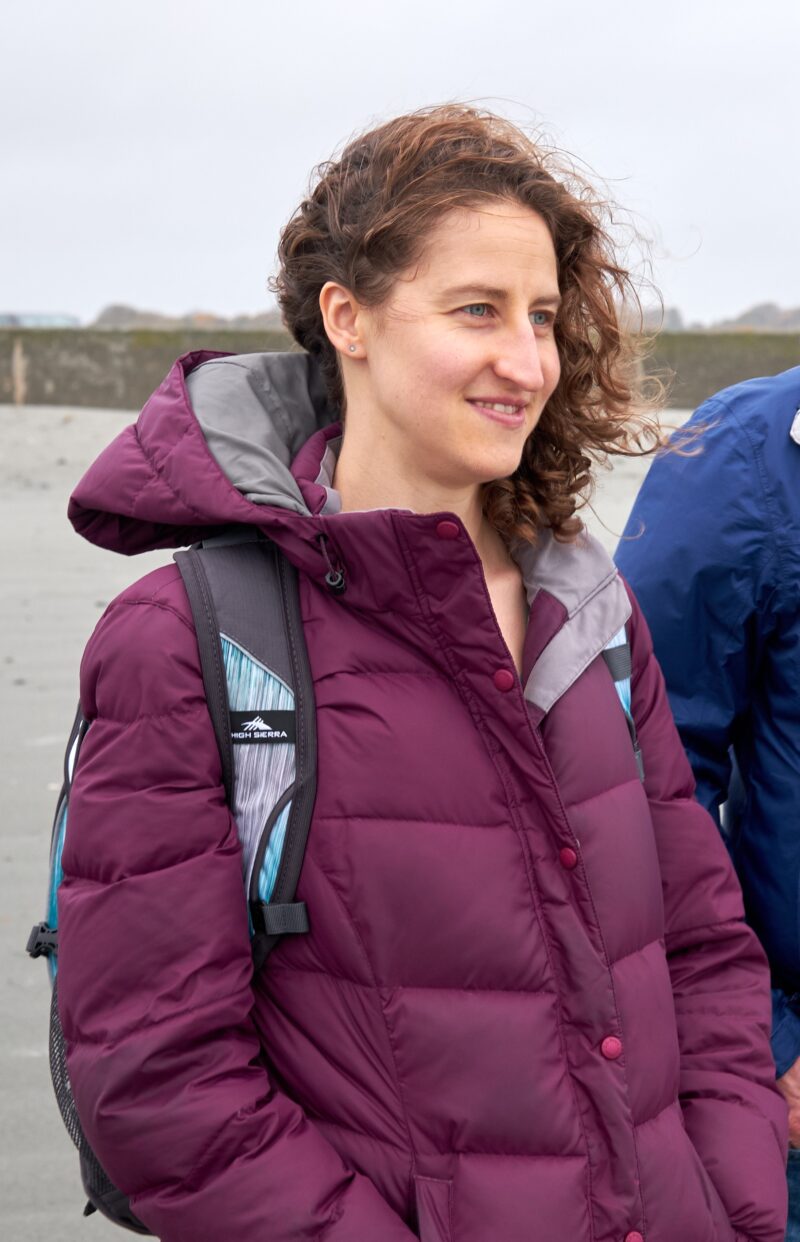
Elizabeth Moore is the author of “The Truth and the Life” (Alternative Book Press, 2014), and her poetry has appeared in Pangyrus, Print Funeral, and Boston Literary Magazine. She lives with her husband and two sons in Massachusetts. Check out her latest collection of poetry, Edge Habitat, which you can order now here.